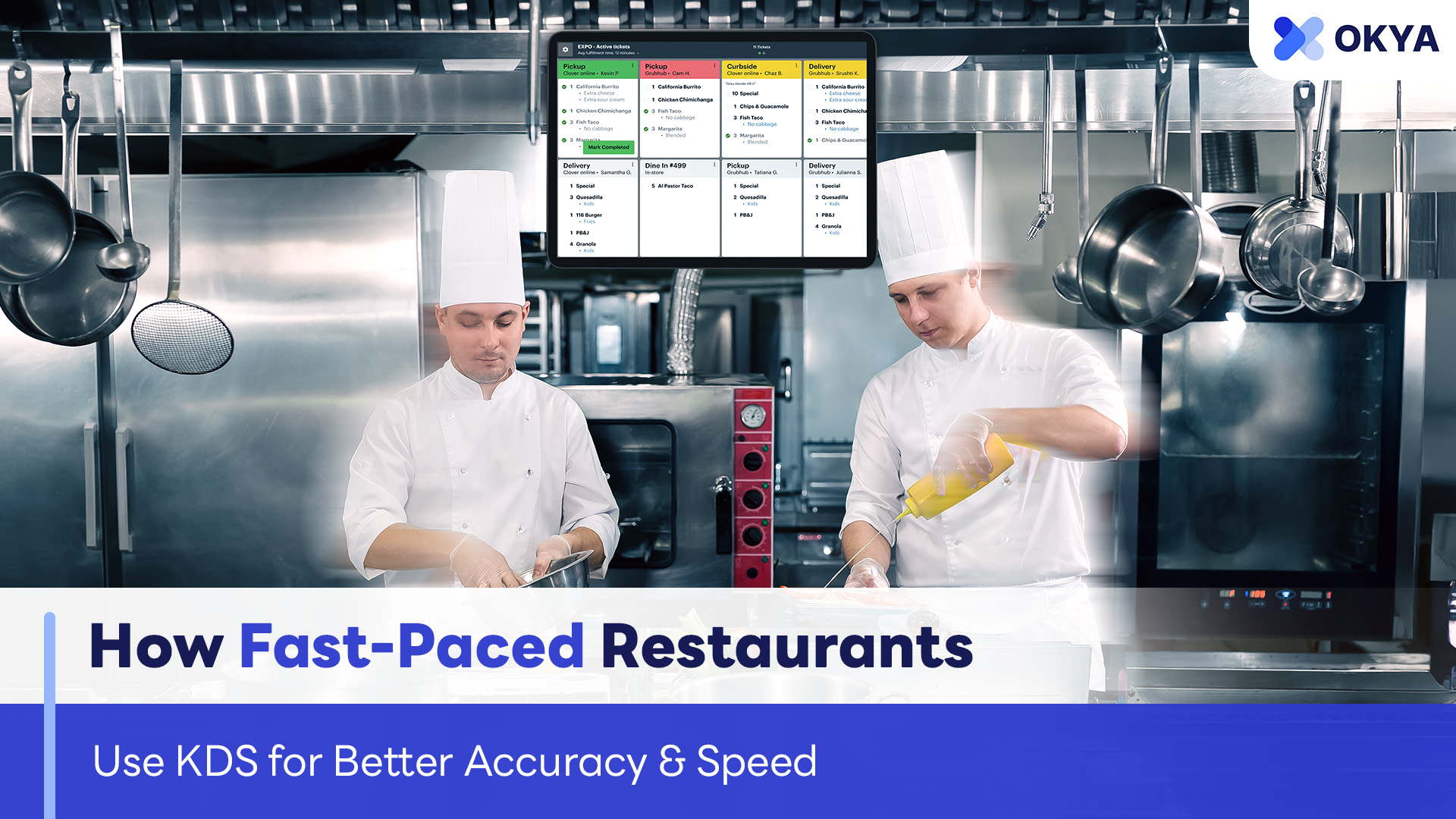
How Fast-Paced Restaurants Use KDS for Better Accuracy & Speed
How Fast-Paced Restaurants Use KDS for Better Accuracy & Speed
Every successful restaurant shares one key ingredient—an effective kitchen operation. A well-run kitchen delivers with accuracy, consistency, and speed, backed by both skilled management and a synchronized workforce. Yet even with these strengths, productivity can break down during peak hours and heavy demand. That’s where technology and automation, such as a Kitchen Display System (KDS), keep operations flowing seamlessly.
This article will provide the benefits of kitchen display systems (KDS), in fast-paced restaurants to enable service accuracy and speed under every condition.
Rethinking the Kitchen: What Is an Advanced KDS and How Does It Work?
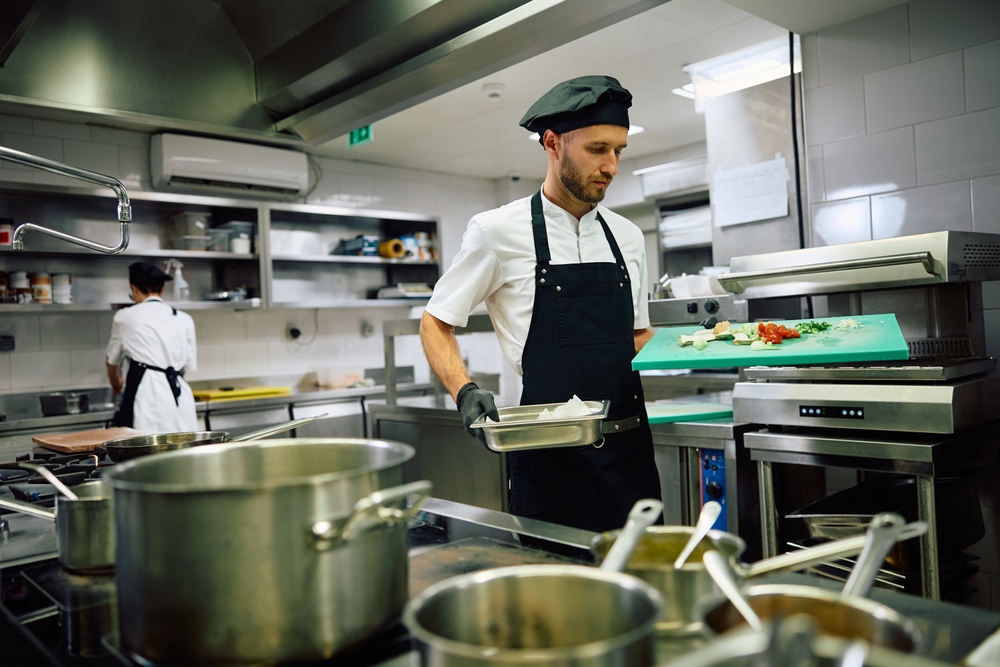
To understand the value of KDS, you need to understand the workflow of commercial kitchens first. A commercial kitchen operates like a synchronized production line. Each order—whether from dine-in, kiosk, or delivery—contains multiple items routed to specialized stations: prep, grill, fry, dessert, or beverage. Each station works in parallel, passing tasks between them until every dish is complete and ready to serve.
What’s challenging about kitchen operations goes far beyond coordination alone — it’s about managing every moving part. Which orders are in prep? Which are cooking? Which are ready for assembly, and which are falling behind schedule? Timing is critical since each dish must be served at the right temperature — hot dishes hot, cold dishes cold.
This is where the Kitchen Display System, or KDS, kicks in. Rather than verbal communication and messy paper tickets that easily lead to errors, the order is “digitized” to ease real-time coordination. With KDS, every station is being informed with real-time information about orders, what needs preparation, cooking times, and status updates. KDS also enables priority status and customized routing, a coordination that paper systems cannot provide. This eliminates the need for a human “orchestrator” to manage a workflow manually - physically calling out orders, coordinating timing between stations, and managing priorities - a role that becomes a bottleneck during peak service.
How Advanced KDS Improves Speed & Accuracy
Even if a proficient kitchen manager could keep your kitchen in order, it is not 100 percent guaranteed that kitchen operation is always “smooth as silk”, especially as multiple points of failure remain in the work flow, including the manager. The implementation of KDS in your kitchen not only eliminates bottlenecks but also significantly improves your kitchen’s accuracy and speed, which is made possible by:
- Automated order distribution: Orders flow directly from the POS into the KDS, which automatically breaks down each ticket and routes individual items to the appropriate station. This eliminates manual distribution — often error-prone and inefficient — and enables true parallel processing, allowing every station to work simultaneously at maximum efficiency.
- Intelligent prioritization: KDS allows kitchen staff and managers to easily prioritize orders and items in real time by navigating directly within the display interface. Orders can be sorted or flagged based on urgency, order type, or preparation complexity, ensuring the kitchen focuses on the right tasks at the right moment — whether for dine-in, takeaway, or delivery. During peak hours, this helps maintain workflow clarity and prevents confusion, enabling the team to deliver each dish faster and more accurately.
- Real-time visibility across stations: With the KDS, the same information is being distributed throughout every station - from arrival to completion. Everyone is being informed and coordinated without lost tickets, missing items, or messy communications. Meanwhile, the kitchen manager can monitor the progress in real-time, enabling him to optimize or solve unexpected problems that degrade your services.
- Understandable clarity: KDS ensures that every instruction — from recipes and portion sizes to special notes — is displayed clearly and consistently. Everyone, from the head chef to waitstaff, works from the same information, which improves order accuracy, reduces waste, and speeds up preparation. Reducing errors in your kitchen means better satisfaction, faster services, lower operation costs, and less food waste - regardless of the complexity of your menu or operation procedures.
Best Practices for KDS Deployment
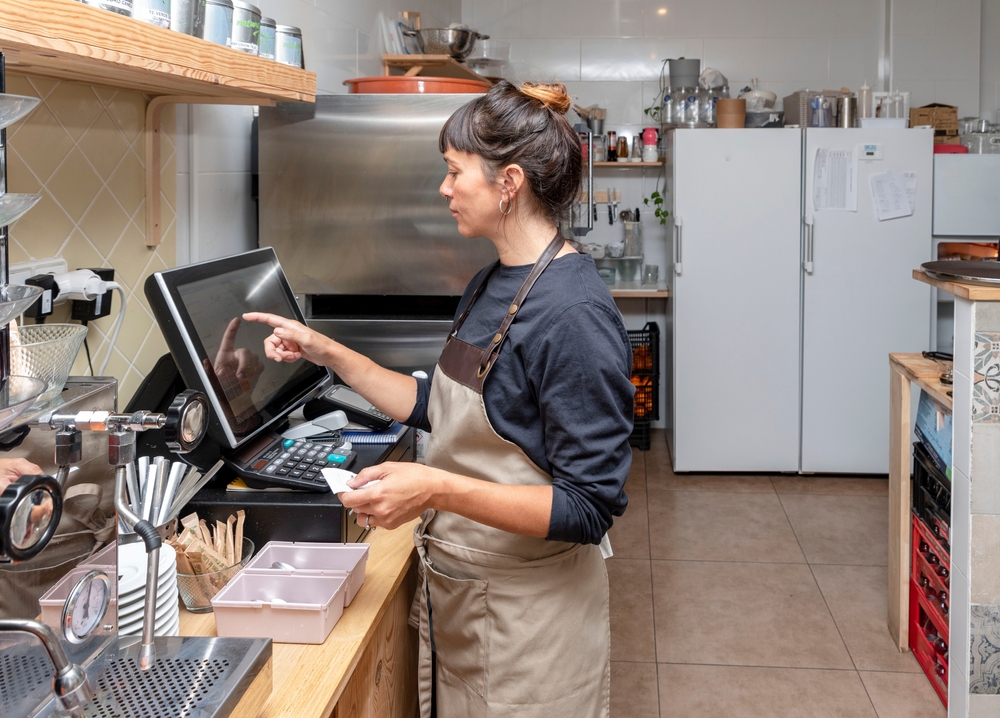
Integrating KDS into your kitchen isn’t just about bringing a display screen into every station. It is about deploying a comprehensive system that provides a lean and effective operational workflow to both the kitchen manager and the other kitchen staff. This can be achieved through three key mechanisms:
- Eliminate “points-of-failure”: KDS removes the breakdown points inherent in traditional kitchen operations: lost paper tickets; unheard verbal communication; and the limits of manual oversight during high-volume periods. By shifting to a digital system, the information is clearly visible, organised, and evenly distributed.
- Enable Communication and Coordination: KDS maximizes productivity by streamlining kitchen workflows into the shortest possible route. Through shared visibility across all stations, every team member stays in sync — even at peak hours. What used to take months or years of teamwork to perfect can now be achieved through a few hours of KDS training, thanks to intuitive layouts, color-coded status indicators, and real-time updates.
- Using them for management: KDS isn’t just a tool for the kitchen floor — it’s a management powerhouse. Integrated within a connected ecosystem, it provides real-time visibility into prep times, ticket duration, and station performance. Managers can instantly identify slowdowns, recurring bottlenecks, or rework caused by miscommunication
With these three dimensions, KDS turns your kitchen workforce into a synchronized operation—accurate in execution, effective under pressure, and manageable even during peak service. Every station coordinated, every order tracked, every outcome is visible and measurable.
Okya: The All-in-One Solution for High-Volume Kitchens
For restaurant brands operating high-volume kitchens across multiple locations, success depends on more than just displaying orders — it requires a fully connected coordination system that keeps every station, screen, and staff member in sync. This is where Okya, the All-in-One Restaurant Chain Solution, delivers value. Okya’s KDS is built to serve everyone in the workflow, from line cooks and kitchen managers to management.
Built for enterprise and multi-location restaurant brands that need rapid deployment with centralized control from the start, Okya is a solution that helps your restaurant brand deliver true Online-to-Offline (O2O) connectivity through its modular architecture. Every foundational component needed for coordinated kitchen operations comes standard: unified order flow from all channels, intelligent station routing, real-time synchronization, recipe management, inventory control, and performance analytics.
Trusted by many of the fastest-growing restaurant brands across Asia, Okya is a ready-to-deploy KDS and kitchen management solution designed to handle scale with ease. Its robust infrastructure minimizes the learning curve, optimizes workflow under pressure, and ensures faster ticket turnaround with fewer order errors.
Whether you’re a small restaurant seeking reliable kitchen coordination during peak hours or a large chain requiring a system for thousands of staff across hundreds of locations, Okya provides the unified platform to streamline your kitchen operations. If you’d like to explore how Okya’s integrated KDS can enhance your restaurant workflow, our team is ready to provide a tailored demonstration and consultation.