How Restaurant Chains Use Admin Dashboards for Smarter Management at Scale
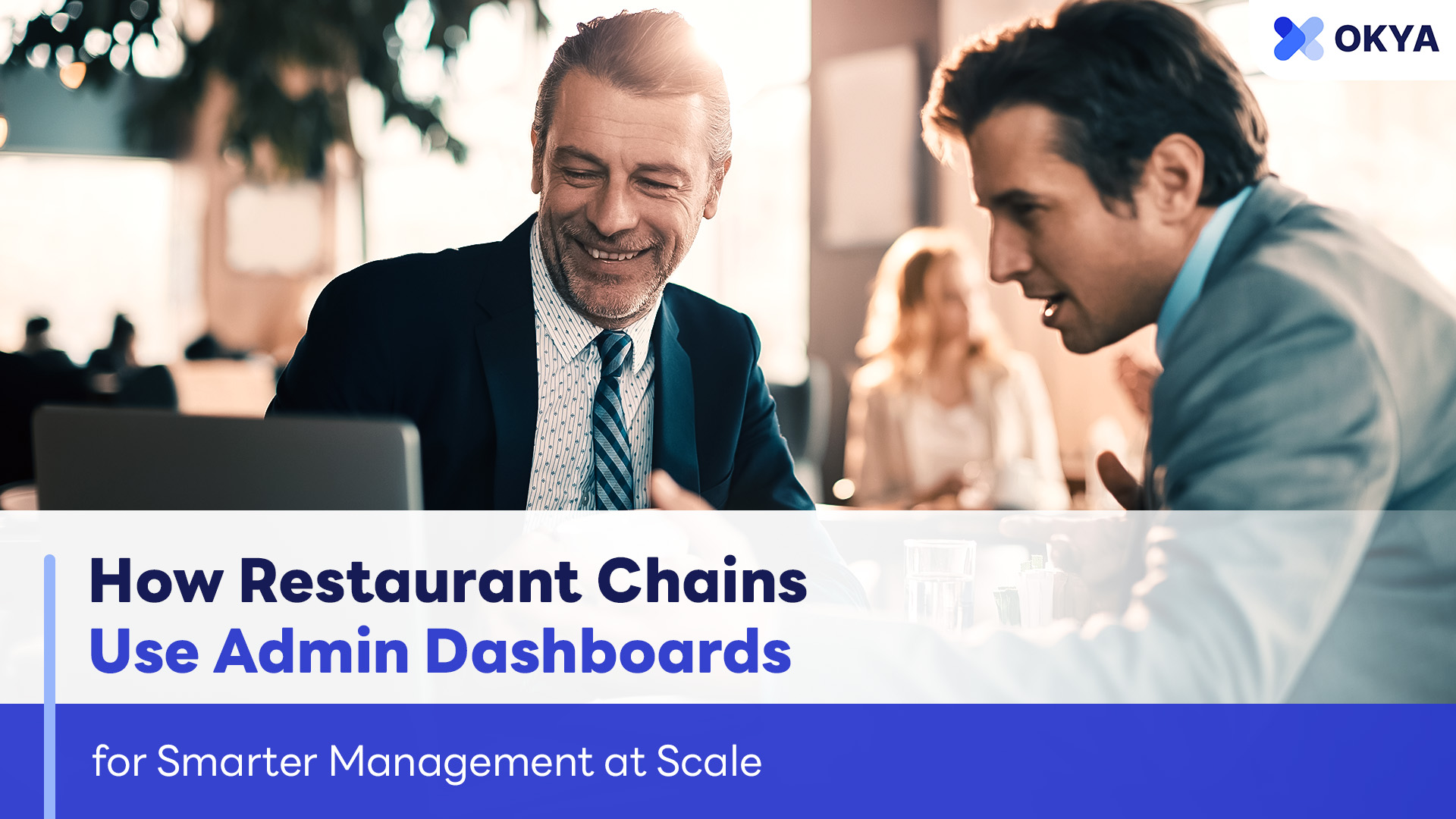
How Restaurant Chains Use Admin Dashboards for Smarter Management at Scale
The primary goals of managing restaurants are increasing customer numbers, boosting spend per customer, and controlling costs. However, running a restaurant chain introduces additional challenges, such as maintaining visibility, consistency, and control across dozens or even thousands of branches. Digital integration through an admin dashboard enables these objectives to be managed from a unified command center—without requiring a large workforce or complex management structures.
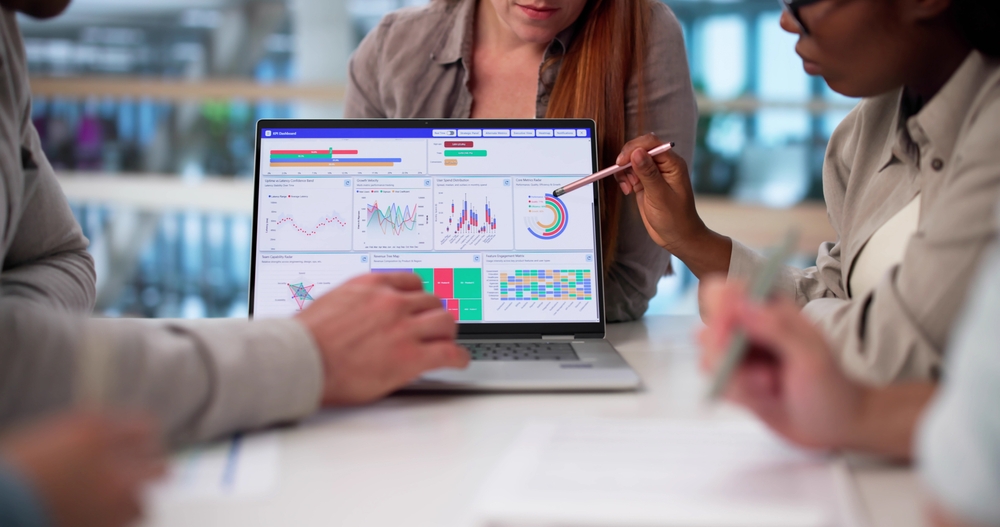
This article outlines the core functions of an admin dashboard for effective restaurant chain management, where both performance and scalability are crucial.
Concepts to Know When Managing Restaurant Chains
Key concepts in managing a restaurant focus on profitability - selling menus that customers want, serving quality dishes, and delighting your customers. However, there is a huge difference between managing one restaurant and managing a restaurant “chain”. As the number of locations grows, “invisible corners” such as poor service, inconsistent cooking, wasted ingredients, or incorrect pricing also grow in frequency and impact. These matters can hinder your profit, customer satisfaction and brand reputation.
To keep those “invisible corners” minimal and manageable, managing multiple restaurant outlets must go beyond sales to include gaining visibility, consistency, and control.
Here are essential management priorities to highlight for a multi-location restaurant chain:
- Operational visibility: Tracking the performance of each outlet, in terms of sales, workforce performance, customer satisfaction, and other essential metrics in real-time.
- Standardization across locations: Keeping everything consistent,menus, pricing, and promotions, in every outlet.
- Data-driven decision making: Use real-time, accurate data to understand what’s happening at each outlet—what’s selling, what’s not, which ingredients are being overused, which promotions drive traffic, and where operational bottlenecks occur. This allows management to quickly identify trends, prevent stock-outs, reduce food waste, refine labor planning, and improve margins across all locations.
These priorities can be summarized as maintaining clear oversight, ensuring consistency, and resolving discrepancies. Whether managing two locations or thousands of locations across different regions, the implementation of an admin dashboard improves the ability to navigate, plan, and execute what is necessary for your restaurant chain.
The challenges that make managing multiple outlets difficult
As mentioned earlier, the “invisible corners” of restaurant operations — poor service, inconsistent execution, wasted ingredients, incorrect pricing — multiply as a brand expands. Growth naturally introduces complexity: more procedures, more staff, more processes to coordinate, and more information that must flow accurately between branches and the head office.
For most restaurant chains, these three challenges become unavoidable:
- Lack of real-time visibility: Key operational metrics, sales, inventory levels, and performance of the branches could be delayed, incomplete, or even inaccurate. Without timely and trustworthy data, it becomes nearly impossible for management to make sound decisions or react quickly.
- Inconsistent operations: Without a centralized oversight mechanism, unauthorized menu changes, incorrect pricing, outdated promotions, or differences in customer experience can easily appear across branches. Even small inconsistencies can compound and damage brand reliability.
- Individual or Localized issues: Even with standardized company-wide policies, each branch faces unique challenges: understaffing, peak-hour congestion, operational bottlenecks, or regional customer preferences. Solving these issues requires granular, outlet-level data—and most systems don’t provide it.
Before digital management tools existed, restaurant chains tried to solve these issues in two ways:
- Strict, top-down control from headquarters, or
- High autonomy for branch managers.
Both approaches required extensive reporting processes, large supervisory teams, and endless site visits — all expensive, slow, and inconsistent.
Even worse, most of the restaurant chains did not overcome challenges but their organizations became increasingly complex with hundreds of “district” or “regional” managers, or inspectors from head office who didn’tdo much but add more “red tape” to management procedures. At the end of the day, most of the problems remained unsolved and personnel costs skyrocketed without operational improvement and even less margin.
Centralized Management with Admin Dashboard
An admin dashboard helps a restaurant chain overcome multi-outlet challenges through three core advantages:
- Comprehensive visibility: Real-time statistics, sales, inventory, and performance data from every outlet are provided in a single admin dashboard. This removes blind spots and enables informed, timely decision-making.
- Chain-wide impact from a single action: Menu updates, pricing changes, promotions, and operational policies can be configured through the admin dashboard from head office one time and are instantly updated across all branches—ensuring consistency without manual intervention.
- Remote issue resolution: Outlet-specific problems such as underperformance, equipment downtime, stock shortages and labor shortages could be identified and addressed remotely from the admin dashboard, without on-site visits.
From an operational standpoint, an admin dashboard streamlines the responsibilities of both headquarters and branch managers. Branch managers can focus on daily execution, while headquarters gains a holistic, real-time view of the entire chain. Strategic updates—such as promotions, pricing, inventory rules, and performance targets—are automated and rolled out centrally through the dashboard.
This creates a more efficient operating model where central leadership guides strategy, local teams execute effectively, and both sides operate with shared visibility. The result: improved profitability, better customer experiences, stronger brand consistency, and reduced manpower requirements.

Centralized Control for Restaurant Chains with Okya
For restaurant brands trying to expand into multiple locations, unification becomes essential for both reputation and profitability. It’s not just about managing many branches, it’s about synchronizing every operational component into one cohesive ecosystem. This is where Okya, the All-in-One Restaurant Chain Solution, delivers value. Okya’s admin dashboard is the command center of the ecosystem delivering the necessary information and control every stakeholder, from branch managers to CEOs, everything they need.
Built for enterprise and multi-location restaurant brands that need rapid deployment with centralized control from the start, Okya is a solution that helps your restaurant brand deliver true Online-to-Offline (O2O) connectivity through its modular architecture. With a fully integrated operational pipeline — POS, kitchen displays, inventory, CRM, loyalty, and analytics — Okya gives restaurant chains a complete foundation for data-driven operations. It delivers live reporting, instant chain-wide menu and pricing control, and real-time visibility into inventory and performance to maintain cost efficiency.
Trusted by the fastest-growing restaurant brands across Asia, Okya enables restaurant groups to achieve full operational control from anywhere, ensuring consistent execution, faster decision-making, and scalable growth with the help of a unified dashboard.
Whether you’re a small restaurant group implementing a proper multi-unit framework or a large chain trying to streamlining fragmented operations, Okya provides a unified ecosystem needed for full operational control. If you’d like to see how Okya’s unified dashboard can enhance performance across your organization, our team is ready to provide a tailored demonstration and consultation.