Frictionless POS Payments Across Counter, Table, Kiosk, and Online
Frictionless POS Payments Across Counter, Table, Kiosk, and Online
Following the trend toward a cashless society and the growing demand for self-service and online shopping, cash payments are gradually being replaced by cashless methods—even in restaurants. However, the major barrier to fully adopting this transition is that the payment process is not yet seamless enough to be considered truly frictionless. The greatest bottleneck lies in the lack of infrastructure that enables a smooth and efficient flow of payments across the available touchpoints.
This article will provide a guide to cashless payments and how a point-of-sale system can lead to frictionless payments across the counter, table, kiosk, and online, improving customer experiences.
Cash VS Cashless: What's Currently Available for Payments
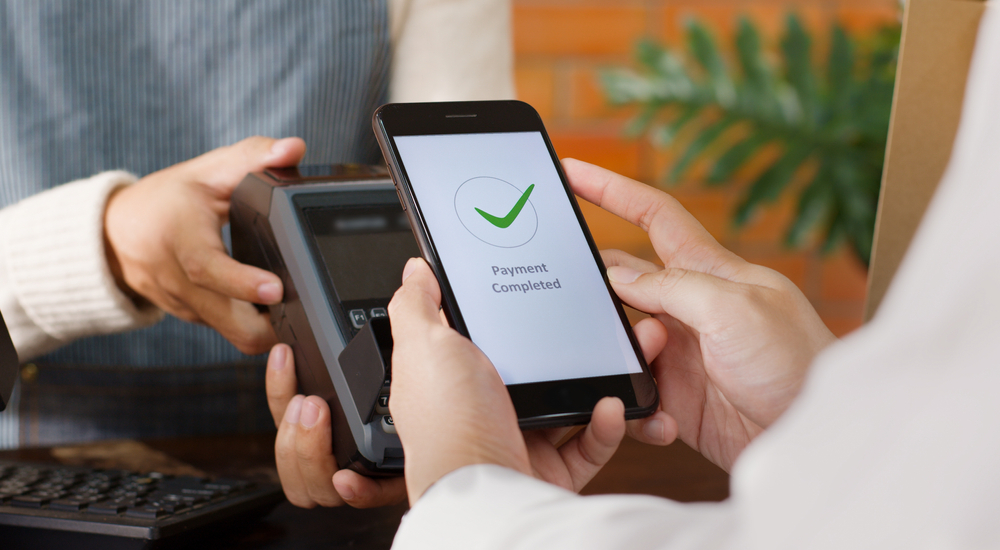
Beyond cash, which has been used and proven for thousands of years, several cashless payment methods have been accepted and adopted to become common practice in payments throughout Thailand.
The leading options for cashless payments in 2025 in F&B industry include:
- Credit/Debit Cards: Every branded restaurant chain and many upscale restaurants accept payment by credit and debit cards. Visa and Mastercard are commonly accepted nationwide, while regional cards like Japanese JCB and Chinese UnionPay are commonly accepted in major cities. In Thailand, EDC machines are provided by commercial banks, and most machines are upgraded to accept both traditional and contactless payments.
- E-Wallets & Digital Payment Gateways: Branded restaurant chains and delivery platforms also accept cashless payment through e-wallets and digital payment gateways. While global providers such as Amazon Pay, Apple Pay, Google Pay, and Samsung Pay are not officially available in Thailand, and Paypal is not widely accepted in restaurants, several local and regional gateways such as AirPay, GrabPay, ShopeePay, Rabbit LINE Pay, and TrueMoney Wallet are widely used in restaurants and delivery platforms but also in convenience stores and mass transit systems.
- QR Payments: QR payments have become the most common method of cashless payment in Thailand and are available anywhere from food stalls to fine dining restaurants. The largest system is the government-developed PromptPay, which binds wallets to a National ID or mobile number. In addition, the infrastructure has been recently upgraded with the ASEAN Integrated QR Code Payment System, which has made QR transfers a common standard throughout ASEAN countries.
- Bank Wire Transfers: For small restaurants, a direct wire transfer to the owner's bank account is a preferred way of cashless payment because no fees are paid on the transaction. In addition to PromptPay, commercial banks have deployed mobile applications that help ease the operation without the requirement of dedicated machines.
As your restaurant grows — both in sales volume and number of locations — managing payments manually becomes unsustainable. To ensure accuracy, transparency, and consistency across all payment methods, you need a structured system. Implementing a robust POS infrastructure centralizes payment processing and revenue tracking, providing the foundation for scalable operations.
Making Payments Easy for Both Customers and Staff
A well-implemented POS system should make payments effortless for both customers and staff. However, many restaurants still encounter friction due to system limitations or poor integration. Below are the most common pain points that affect both the guest experience and operational efficiency:
- Limited availability of payment methods: While cash remains a reliable baseline, it’s becoming less accepted in many countries where digital payments dominate daily transactions. Guests now expect flexibility, whether paying by card, e-wallet, or QR. For example, a customer might be able to pay with TrueMoney Wallet at 7-Eleven, yet find PromptPay unavailable because 7-Eleven doesn’t accept it as a payment method. When popular local payment methods aren’t universally supported, it disrupts convenience and can cause customers to abandon a purchase altogether.
- Failure of integration between the POS and external gateway: In many restaurants, order totals from the POS must be manually entered into payment terminals, or in the case of QR or bank transfer payments, customers must scan a code and manually type in the total amount themselves. Without full integration between the POS and payment gateway, this manual process introduces unnecessary friction — increasing the risk of incorrect amounts, missed payments, or delays in confirming transactions. These errors not only slow down service but also complicate reconciliation at the end of the day, especially for high-volume outlets.
- System that is hard to use for both customer and operator: With multiple payment touchpoints—traditional, kiosks, tablets, online, or through 3rd-party applications—making your point-of-sale system easy to use is now the priority, as users are not prepared for a hard-to-use system. A confusing point-of-sale system can make both customers and staff struggle with payments, and in the end, everyone becomes frustrated with the service.
- System Reliability: The Achilles heel of every point-of-sale system is its reliability. Whether caused by hardware, software, connectivity, or human error, a failure means a manual fallback to cash only, or even worse, a complete shutdown, as there is no system to process sales and other related matters.
These common problems ultimately lead to the worst consequences: bad customer experiences, bad reviews of your brand, and lost revenue as your customers never return.
The Role of Point-of-Sale in Achieving Frictionless Payments
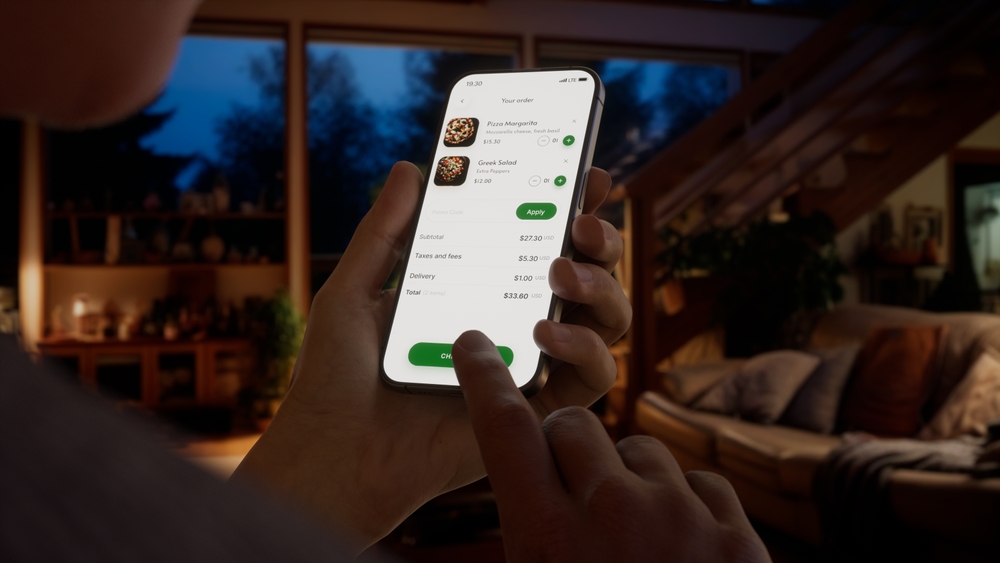
This is where a robust point-of-sale system becomes a key enabler of frictionless payment in your restaurant. Imagine a modern restaurant operation with multiple touchpoints—traditional counters, kiosks, tablets, online platforms, and third-party delivery applications. The primary goal is to offer every customer the smoothest possible payment experience: fast, easy, accurate, and allowing them to use their preferred payment method every time, at any time.
A quality point-of-sale system provides you with key capabilities to fulfill its role, including:
- Seamless integration with payment gateways: The point-of-sale system can be designed to integrate cashless payment infrastructure from the bottom up, which means it is designed for direct processing through necessary APIs, or for multiple integrations with 3rd-party hardware and software to ensure compatibility. This seamless integration leads to a point-of-sale that can be deployed faster, supports major payment gateways at every touchpoint, and is prepared for new payment systems available in the future.
- Well-designed user experience throughout the journey: Modern restaurant operations require more self-service than in the past, especially in the ordering and payment process. This forces the point-of-sale system to be easier to use for both the customer and the staff. This ease-of-use means anyone requires a minimal learning curve to complete a payment process through their preferred method—cash or cashless—which is possible through a clear, quick, and consistent user interface, deployed consistently either at your outlets or through a 3rd-party application.
- A system that is always reliable: Reliability is non-negotiable for any point-of-sale system. A dependable POS should support offline transactions, allowing sales to continue seamlessly even during network interruptions. Once connectivity is restored, all transactions should automatically sync to ensure accurate reporting without manual intervention. Combined with redundant hardware, stable software architecture, and responsive support, this ensures minimal downtime and uninterrupted operations — keeping both service and revenue flow consistent, even under pressure.
Okya: The Solution for Frictionless Payments
For restaurant brands looking for a completely frictionless payment process, they don’t only need a dependable point-of-sale but also a system that is ready for every possible payment workflow. This is where Okya, the All-in-One Restaurant Chain Solution, can be the solution you are looking for. With Okya, you will have a point-of-sale system that is built from the ground up to support both cash and cashless payments across every touchpoint, while being secure, reliable, and easy to use.
Built for enterprise and multi-location restaurant brands that require real-time visibility and control from day one, Okya enables true Online-to-Offline (O2O) connectivity through its modular architecture. With modern payment infrastructure already built in, restaurants can simply connect to preferred payment provider APIs, deploy a unified payment interface across all touchpoints, to easily manage transactions, settlements, and refunds. The result is a frictionless setup that scales easily and simplifies financial operations across every outlet.
Trusted by the fastest-growing restaurant brands across Asia, Okya is built to handle every payment scenario—seamlessly, securely, and at scale. From counter to kiosk to online, it delivers the reliability and real-time visibility enterprise brands need to operate without friction or downtime.
Whether you’re a growing restaurant integrating cashless payments for the first time or a multi-location chain standardizing systems across hundreds of outlets, Okya provides the unified payment infrastructure that keeps your operations running smoothly and your guests coming back.
Ready to simplify your payment ecosystem? Contact our team for a personalized demonstration and see how Okya powers frictionless payments—everywhere your brand operates.