Leveraging Loyalty Programs & CRM Systems for Restaurant Brand Growth
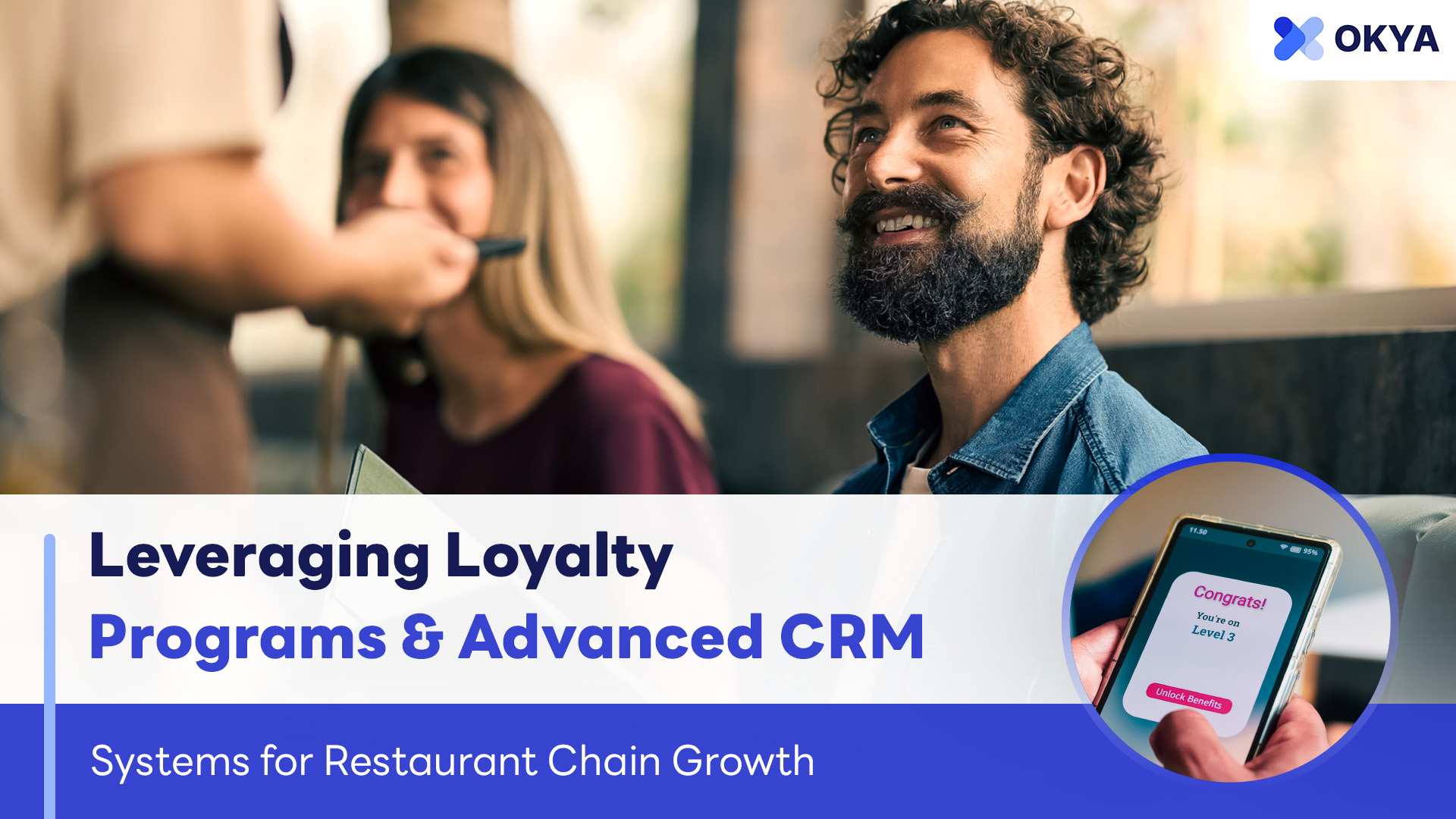
One of the biggest challenges for restaurant brands today is not attracting customers but keeping them. Product quality alone is no longer enough to secure loyalty when guests have endless alternatives. A well-designed loyalty program helps retain your most valuable customers and attract new ones through meaningful rewards and personalized engagement. To manage these programs effectively, restaurants rely on CRM systems that capture customer data, automate campaigns, and turn every visit into insight.
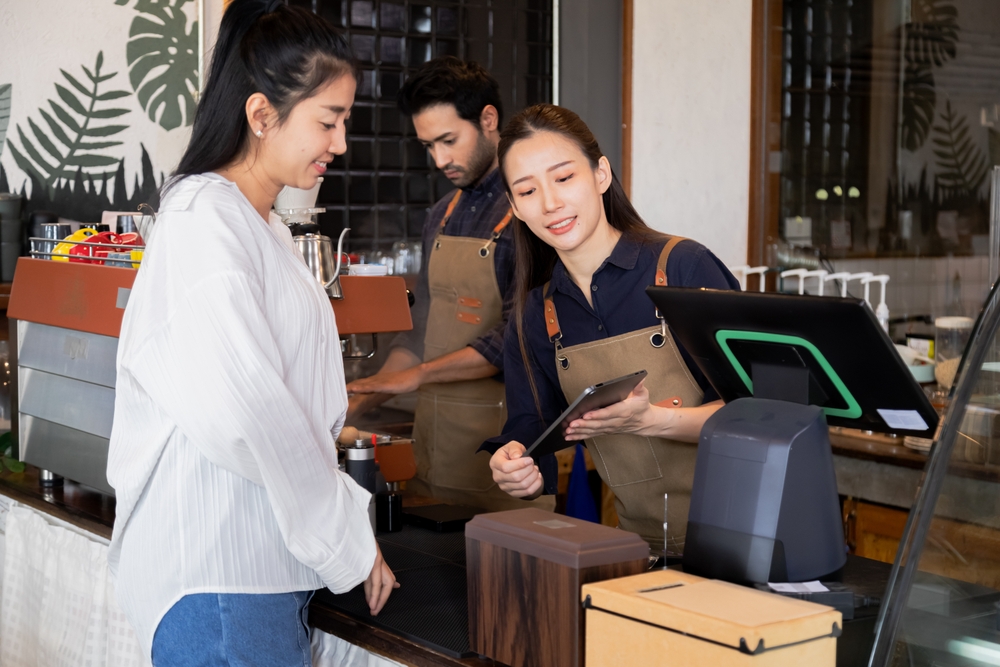
How Does a Loyalty Program Benefit Your Restaurant Brand?
A loyalty program is one of the most powerful marketing tools a restaurant brand can use to grow sustainably. Its purpose is twofold:to build retention—keeping customers buying from you, not your competitors; and to increase repurchases—making your customers buy more, both in terms of frequency and value. A loyalty program is considered one of the essentials of loyalty marketing, along with branding, customer proposition, and customer experiences.
Loyalty programs strengthen both retention and advocacy by turning satisfied guests into repeat buyers and brand promoters. The most effective programs achieve this through the “3Rs”: Rewards, Relevance, and Recognition.
- Rewards: The primary purpose of rewards is to create a positive outcome after you buy. Free products, discounts, loyalty points, or other exclusive benefits can be used as effective tools that make customers feel appreciated and valued. However, what makes rewards different from giveaways or other broad-targeted campaigns is that rewards are a part of the customer experience that generates a repurchase based on relationships, not just price.
- Relevance: This is the true backbone of a loyalty program, as it distinguishes a loyalty program from a discount coupon in a generic ad. A hundred customers also equal a hundred different preferences—some may prefer discounts, some may prefer add-ons, and others may prefer exclusive deals. Relevance is the understanding of these individual needs and preferences. This is a very important factor for delivering what matches each customer's needs, when they are really in need of it.
- Recognition: Recognition is about making the customer feel visible and valued as an individual, making them feel important. When you feel a specialized engagement with every visit, you begin to believe that the brand appreciates every one of your purchases. This strengthens the connection between brands and customers into an emotional bond. With the emotional side brought into the decision process, another factor becomes essential when choosing between your brand and your competitor: being 'Mr.X' to your brand, or becoming 'another customer' to your competitor.
Effective implementations of loyalty programs can be found throughout the F&B industry. For example, Coffee Bean & Tea Leaf has its own reward program that covers all of the 3Rs: it has a point-based program based on purchase value, those accumulated points can turn into choosable rewards—such as discounts or add-ons—and as you remain loyal, the scheme becomes more personalized with premium goods, a birthday reward, and occasionally tailored special deals. This mechanism encourages you to buy more to get benefits and to stay with them, as better benefits await. With a large, loyal pool of customers, expansion becomes more viable as there is greater available demand for your brand.
How to Manage Your Loyalty Program Effectively
Your restaurant may already be using some tools like special discounts, coupons, or stamp cards but these are true loyalty programs as they fail to deliver personalised relevance or recognition. For example, stamp cards can only tell you that Mr.X is a 'frequent buyer', not 'Mr.X, who loves Cheeseburger with extra Bacon', and the reward you offer may not fit his needs—he may want a free ice cream rather than the larger size of fries you currently offer.
Even though you may not have a loyalty program yet, deploying one is not an overly difficult task, as you can replicate reward structures from successful examples or even model your loyalty program after your competitors. What is hard to duplicate is personalized relevance, as it requires data accumulation to build complex patterns of customer behavior and their needs. In addition, recognition is powered by a massive database that not only helps shape the offer but also informs your staff about 'who they are'.
This is where Customer Relationship Management, or CRM, plays a large role in turning a promotion campaign into an effective loyalty program. The core objective of CRM is obtaining data from customers; organizing, categorizing, and analyzing it into insights; and using that data and those insights for automation and operation at every touchpoint between your brand and your customers.
Here is how CRM helps make loyalty programs an effective tool for driving retention and repeat business for your restaurant brands.
- Centralize all customer data: CRM can log every interaction - what, when, where, and how many purchases occurred at every touchpoint - dine-in, kiosk, online, and delivery. As data accumulates, it forms a comprehensive view, combining macro trends across segments with micro-level insights into individual customer preferences.
- Segment customers and create a tier structure: CRM insights into visit frequency, spending habits, and favorite menu items allow you to identify customer groups that share similar behaviors. These segments form the foundation for multi-tiered rewards programs that motivate repeat visits, increase average spend, and strengthen brand loyalty.
- Personalize Rewards & Communication: With CRM data, every customer interaction can feel tailored. The system analyzes purchase history, preferences, and order patterns to deliver rewards and messages that truly resonate — from personalized offers to automated birthday or milestone celebrations that strengthen emotional loyalty.
- Unify Online-to-Offline (O2O) Experiences: Implementation of CRM helps retain the customer to your brand, as guests earn and redeem rewards effortlessly, whether they order in-store, online, or via delivery apps. In addition, it leads to accurate reward updates, helping ensure that customers will never lose any benefits.
- Integrate with Marketing Automation: With contacts being collected through CRM, customers will always be informed with email, SMS, and push notifications, which can be adopted as retention or up-selling tools directly to potential targets.
- Encourage Cross-Channel Engagement – CRM helps enable multi-channel loyalty schemes so customers can benefit from your loyalty program, other brands under your umbrella, and even those of your partners such as credit card companies, payment apps, petrol stations, etc.
- Real-time tracking and optimization: CRM helps you monitor redemption rates, repeat purchase trends, and campaign ROI in real-time. These data and insights help you deliver and fine-tune the program that gives you maximum effectiveness.
- Ensure Scalability and Governance: Either provincial or regional expansion, CRM helps provide you with an infrastructure that is ready to deploy with minimal tweaking, and also ready for cross-border integration. Meanwhile, customers’ data remains secure through authentication, permissions, and compliance-ready systems.
As a real-world use case, a CRM allows us to know that Mr. X loves to buy a cheeseburger with extra bacon every Sunday, followed by an ice cream for his dessert'. Based on this data, Mr. X can be offered a 10% discount on ice cream if he orders a cheeseburger with extra bacon. In addition, every last Sunday of the month, he can be given complimentary extra bacon as a reward for being a loyal and frequent buyer, even when purchasing from a different outlet 400km away from his usual location.
For an upscale restaurant, CRM remains highly beneficial as it can be adapted for this purpose. For example, a CRM helps your sushi restaurant know that Ms. X frequently orders sashimi every Wednesday night. Then, if you get a rare fish on Wednesday, the CRM will help you automate the process of informing Ms.X of this special offer—a message to Ms. X to inform her about the fish and offer her a reservation for her preferred table. Once she confirms her booking, the system can handle the rest automatically — reserving her favorite sashimi, booking her preferred seat, and applying a 15% VIP discount at checkout.
Choosing the Right CRM for Your Loyalty Program
Choosing the right CRM is critical to turning loyalty strategy into measurable business results. A well-designed CRM doesn’t just manage points and rewards — it becomes the backbone of your guest experience, connecting every touchpoint across the purchasing journey. The right system empowers brands to personalize engagement, unify data, and scale loyalty programs with confidence.

The requirements for an effective CRM, especially for use in a restaurant brand, include:
- Centralize detailed customer profiles: CRM that consolidates all customer data from every touchpoint - dine-in, kiosk, web, and delivery into unified profiles with real-time sync across POS, ordering, and marketing systems.
- Support “Deep Segmentation”: CRM that is readily available with advanced filters - spending, visit frequency, location, preferences, behavior, enabling the capacity for complex customer segments for “tailored-made” effective campaigns.
- Treating full loops of Online-to-Offline (O2O) activity: CRM that is capable of managing online and offline guest interactions as one continuous journey, from first order to repeat purchase. Using them as a basis of management, not only a sidecar.
- Offer integration between sales and loyalty program: The right CRM connects directly with your POS to automate every loyalty interaction — from point earning and redemption to tier progression and custom rule management.
- Provide automated campaign management: CRM that automatically launches and tracks loyalty promotions, reactivation campaigns, and personalized offers, only leaving manual work on configuration and fine-tuning.
- Include advanced analytics & predictive insights: CRM that not only informs you of loyalty-driven revenue, redemption rates, and lifetime value, but also processes the data with “intelligence” to forecast churn and optimize retention.
- Integration of 3rd-Party partners: CRM that ensures reliable compatibility with 3rd-party partners: marketing automation, CDPs, delivery platforms, and other necessary partners, integrating into a comprehensive ecosystem, not a disconnected one.
- Support Multi-Brand, Multi-Region Growth: CRM that is flexible enough that allows you to manage multiple brands, currencies, and languages from one scalable platform, while capable of maintaining multiple standards of enterprise-grade security and compliance.
When your CRM unifies guest data, segmentation, engagement tracking, and rewards in one system, it becomes the engine behind a seamless O2O experience — turning every customer interaction into a loyalty opportunity.
OKYA: The All-in-One Solution for Driving Retention and Repurchases
For restaurant brands looking for an effective solution for increasing retention and repurchase rates, they need a reliable CRM that serves as a backbone for planning and integration. This is where Okya, the All-in-One Restaurant Chain Solution, can be the solution you are currently looking for. With Okya, you will have a common system that works across every touchpoint—storefront, kiosk, online, and delivery—providing you with consolidated customer data that has already been processed through unified CRM and CDP profiles to enable data-driven marketing and decision-making, while offering SSO, access control, and offline reliability built for large restaurant and hospitality operations.
Built for enterprise and multi-location restaurant brands that need real-time visibility and control from the start, Okya is a solution that helps your restaurant brand deliver true O2O connectivity through its modular architecture. The functional CRM directly connects your POS, kiosk, web, mobile, and delivery channels into one ecosystem to eliminate silos and reduce operational inefficiency. In addition, this connectivity and automation help optimize order routing, menu sync, and campaign triggers to reduce manual work and increase sales per guest. Data-driven optimization is also possible through real-time analytics and insights into store performance, order volume, and guest engagement. Designed for growth, Okya lets your brand scale without needing to rebuild or migrate platforms.
Trusted by the fastest-growing brands across Asia looking to unify their operations and scale globally, Okya’s ready-to-deploy solution increases basket size, boosts repeat visits, and reduces costs through automation, upselling, and loyalty-driven retention. This is made possible by a unified O2O ecosystem that connects storefront experiences to loyal customer programs.
Whether you’re a single-location restaurant building your first loyalty program or a large chain unifying online and in-store experiences, the Okya team is ready to help. Contact us to schedule a demo and see how Okya CRM can elevate your customer engagement.