QR Table Ordering: Changing the Economics of the Dining Floor

QR Table Ordering: Changing the Economics of the Dining Floor

The traditional dining model, once considered the immovable bedrock of the hospitality industry, is undergoing a fundamental structural shift. For decades, the "economics of the floor" were dictated by a linear, manual process: a guest sits, a server brings a menu, an order is taken, and eventually, a bill is settled. While charming, this model is fraught with "leakage"—lost time, missed upselling opportunities, and data gaps that leave restaurant owners guessing about their guests’ true preferences.
Enter QR table ordering. What began as a touchless necessity has evolved into a sophisticated financial tool that, when integrated with a robust CRM system, fundamentally rewrites the profit and loss statement of the modern restaurant. By automating the transaction layer, restaurants are seeing a dramatic increase in average check sizes, a reduction in labor stress, and a goldmine of data that feeds directly into their CRM to drive future visits.
Reimagining Labor: From Order-Takers to Experience-Makers
The most immediate impact of QR table ordering is found in labor allocation. In a traditional setup, a significant portion of a server's shift is spent on non-value-added tasks: running back and forth to the POS terminal, waiting for guests to decide, and processing credit cards.

Optimizing the Front-of-House (FOH)
With QR ordering, the "transactional" burden is shifted to the guest. This doesn't mean the end of hospitality; it means the evolution of it. By removing the friction of taking orders and running cards, servers are free to engage in "true" hospitality—checking on food quality and ensuring the guest feels valued.
Increasing Table-to-Server Ratios
Because servers no longer need to spend 5–10 minutes per table manually inputting orders, they can manage more tables simultaneously without a dip in service quality. This allows restaurant chains to maintain high service standards even during labor shortages, directly lowering the percentage of revenue spent on payroll.
Reducing Order Errors
Manual entry is prone to human error—a "no onions" request that goes unheard or a mistakenly tapped button. QR ordering puts the "source of truth" in the customer's hands. Fewer errors mean fewer "voids" and less food waste, protecting the restaurant’s margins.
The Psychology of the Digital Menu: Driving Average Check Size
One of the most surprising economic shifts observed by Okya partners is that guests actually spend more when they order via a QR code. This isn't accidental; it’s the result of digital psychology and optimized UI/UX.
- The Power of Automated Upselling: A human server might forget to ask if a guest wants to "add avocado" or "make it a double," but a digital menu never forgets.
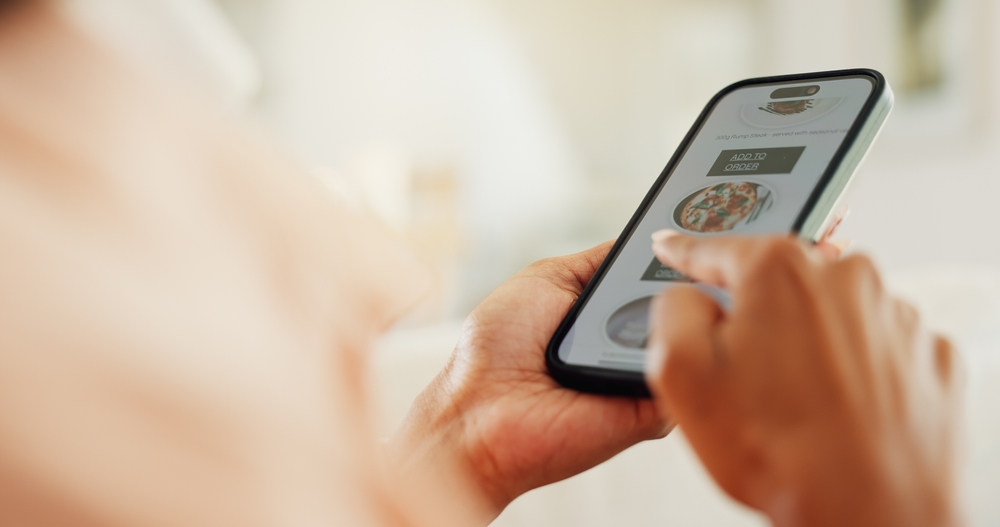
- Visual Temptation and Add-ons: High-quality imagery and strategically placed "Recommended Pairings" significantly increase add-on sales. When a guest sees a high-resolution photo of a side dish or a premium cocktail, the "impulse buy" conversion rate skyrockets.
- Removing the "Judgment Barrier": Customers often feel more comfortable ordering that extra dessert or a second side dish when they don't have to voice it to another person. This "uninhibited ordering" leads to a measurable lift in Average Transaction Value (ATV).
Bridging the Data Gap: Feeding the CRM System
The true economic power of QR ordering isn't just in the current transaction; it's in the next one. In a traditional model, a guest is often an "anonymous diner". Once they leave, you have no way of inviting them back.
Transforming Guests into Data Profiles
Every QR order is a digital handshake. By requiring a simple login or email entry to place an order, the restaurant captures the guest's identity at the point of intent. When linked to your CRM system, every item ordered is tagged to that customer’s profile, allowing for highly personalized future marketing.
Building Loyalty Without the Friction
Traditional loyalty programs often fail because they require a physical card. With QR ordering, the loyalty program is baked into the ordering process. Guests can see their points balance as they shop, encouraging them to spend just a little more to reach their next reward.
Efficiency and Table Turnover: Maximizing "Revenue Per Minute"
For high-volume restaurant chains, the "settling the bill" phase is a major bottleneck. The 10–15 minute delay between a guest asking for the check and finally walking out the door is wasted time where a new, paying guest could be sitting.
- Accelerating the "Last Mile": QR platforms like Okya allow for "Order & Pay" functionality, where guests pay on their own phones the moment they are finished.
- Increasing Table Turns: By shaving 10–15 minutes off every dining session, a restaurant can potentially fit an entire extra "turn" into a busy night. In a 50-table restaurant, this can represent a 20% increase in nightly revenue.
- Real-Time Inventory Control: Because the QR menu is linked directly to the POS and CRM system, "86'd" items (out-of-stock items) are removed instantly. This prevents the disappointment of a guest ordering something only to be told later that it’s unavailable.

Conclusion: The Digital Floor is a Profitable Floor
QR table ordering is no longer just a trend; it is a fundamental evolution of restaurant economics. It addresses the three pillars of profitability: lowering labor costs, increasing transaction value, and capturing the data necessary to drive long-term loyalty via a CRM system.
As the industry continues to face rising food costs and labor challenges, the ability to automate the "boring parts" of dining and double down on data-driven marketing will separate the thriving chains from those that struggle to keep up.
Is your dining floor working as hard as it could be?
See how Okya’s QR Ordering and CRM System can transform your margins.