Stop Overordering: Predictive Analytics for Inventory Management | Okya
Stop Overordering: How Multi-Unit Restaurants Use Predictive Analytics for Inventory Management
The fragile nature of modern restaurant margins leaves very little room for error. Operators face a relentless balancing act: inflation is driving up raw ingredient costs, consumer behavior changes overnight, and supply chains remain stubbornly unpredictable. When margins are squeezed tightly, managing your bottom line comes down to precision at the back of the house.
Yet, many multi-unit restaurant brands still rely on a dangerous operational habit: "just-in-case" overordering.
Driven by manual spreadsheets, historical averages, or simple gut-feeling instincts, managers frequently over-purchase stock to avoid the nightmare of 86ing a popular menu item. But this safety net comes at a steep price. Overordering ties up critical working capital in cold storage, accelerates food spoilage, and creates direct waste that erodes your profitability.
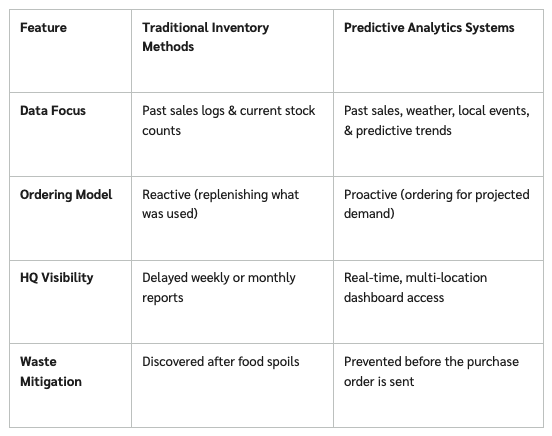
To protect margins, enterprise F&B brands are shifting away from reactive ordering—looking only at yesterday’s sales—and moving toward proactive, data-driven decisions. The modern solution to this chronic industry problem is predictive analytics for inventory management.
The Core Problem: Why Traditional Restaurant Inventory Forecasting Fails
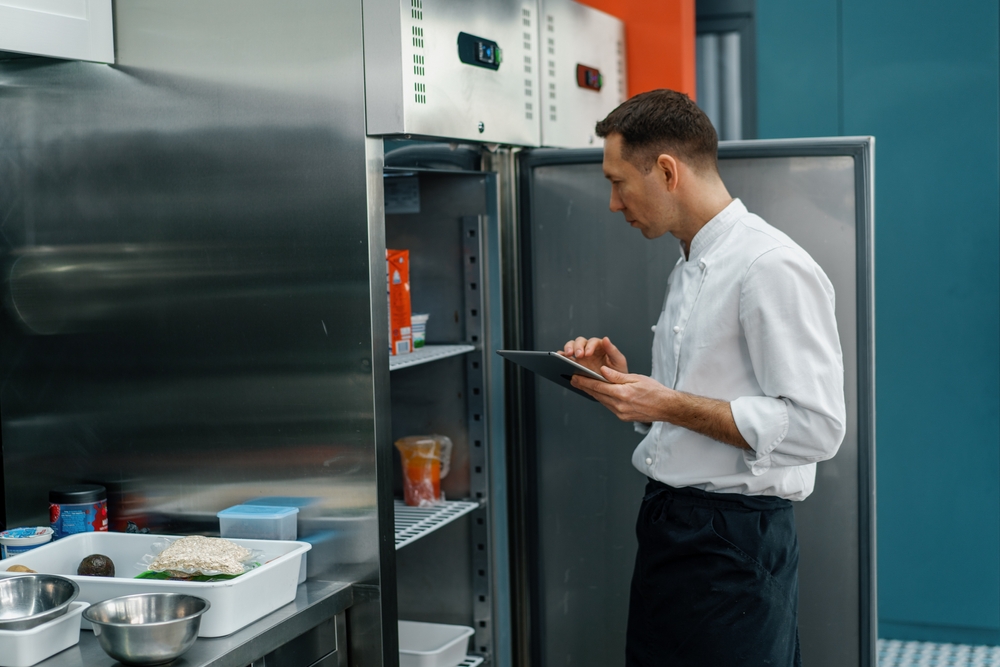
Traditional restaurant inventory forecasting is inherently backward-looking. A typical manager sits down on a Sunday morning, looks at what the location sold over the last two weeks, checks the current stock levels, and places an order.
While this method seems logical, it fails fast-growing enterprise brands for three primary reasons:
- Historical Averages Mask Real-World Volatility: A simple average cannot distinguish between a sunny Friday afternoon in June and a rainy Friday during a holiday weekend. If your software assumes "every Friday is roughly the same," you will consistently find yourself with either severe product shortages or massive overstock.
- The Corporate-to-Store Disconnect: Centralized corporate headquarters often lack real-time visibility into local store operations. Without a unified system, regional managers cannot easily spot patterns of localized waste or intervene before a costly bulk ingredient order is placed unnecessarily.
- Human Error and "Phantom Inventory": Manual stock counts take time, and busy managers occasionally cut corners. Miscounting a case of premium protein or failing to log an expiration date introduces human error into the equation. The result? "Phantom inventory" that appears on a spreadsheet but doesn't exist in reality, leading to emergency orders or accidental double-ordering.
What is Predictive Analytics for Inventory Management?
At its core, predictive analytics for inventory management means translating raw data points into precise, forward-looking purchase recommendations. Instead of manually guessing how much inventory a store needs, machine learning models analyze complex, multi-layered datasets to forecast exact demand.
For a busy enterprise F&B executive, this technology shifts the paradigm. It transforms inventory tracking from a static ledger of what you currently have into an intelligent forecasting roadmap of what your kitchens will actually need over the next 48 to 72 hours.
4 Ways Predictive Analytics Prevents Restaurant Overordering

By replacing guesswork with statistical precision, intelligent forecasting systems address the root causes of excess stock. Here is how predictive analytics works on the ground across your restaurant locations:
1. Weather-Dynamic Demand Forecasting
Localized weather patterns instantly alter consumer eating habits and menu mix choices. A sudden heatwave can cause soup sales to plunge while patio dining items and cold beverages surge. Predictive analytics models integrate local meteorological data directly into the ordering loop. If a drop in temperature is forecasted for the upcoming weekend, the system automatically adjusts the ingredient recommendations to match the anticipated shift in customer behavior.
2. Calendar and Local Event Integration
Whether it is a major sports game at a nearby stadium, a local school district holiday, or a massive downtown convention, external events dictate foot traffic. Manual forecasting requires managers to keep track of these erratic local schedules across dozens of different territories. Predictive systems automatically ingest regional event calendars, scaling purchase orders up for high-traffic zones and dialing them back for locations that empty out during public holidays.
3. Granular Automated Menu Engineering
A shift in raw ingredient demand is rarely uniform. If a specific limited-time offer (LTO) or seasonal promotion starts trending online, your supply chain needs to react immediately. Predictive systems link raw ingredient quantities directly to the real-time velocity of specific menu items. As a promotion scales up, the platform flags the necessary supply chain increases at the component level, ensuring you don't over-purchase ingredients for slow-moving baseline items.
4. Waste Mitigation and Shelf-Life Tracking
According to food waste research organizations like ReFED, the restaurant sector generates millions of tons of food waste annually—and a significant portion of that waste begins directly on the ordering sheet. Predictive analytics tracks real-time expiration timelines alongside your operational velocity. By cross-referencing shelf-life with projected demand, the platform alerts managers to utilize existing stock before it spoils and blocks the automated ordering of unnecessary duplicates.
The Financial Impact: Beyond Cutting Food Waste
Implementing predictive analytics for inventory management isn't just an eco-friendly initiative; it is a fundamental driver of profitability that satisfies operators and CFOs alike.
- Optimized Working Capital
Every dollar sitting on a shelf in the form of excess dry goods or overstocked cold storage is capital that cannot be used to grow your business. Reducing safety stock levels to lean, data-backed minimums frees up cash flow that can be immediately reallocated toward brand expansion, marketing, or technology upgrades.
- Streamlined Labor Efficiency
Restaurant managers should spend their time coaching staff and engaging with guests, not staring at dense inventory spreadsheets for hours every week. Automated purchase recommendations reduce the time required to place accurate orders down to a few clicks, saving valuable administrative hours across your entire network.
- Data-Backed Supply Chain Control
When your corporate team has absolute visibility into true predicted volume across 50+ locations, negotiating with suppliers becomes a data-driven conversation. You can accurately lock in bulk pricing and streamline delivery schedules based on precise future needs rather than rough estimates.
Transitioning from Reactive to Predictive Inventory Controls
Moving your multi-unit brand away from legacy operational habits requires a structured approach. The transition relies entirely on the unification of your data ecosystems. To get accurate forecasting output, you must feed the predictive models clean input. This means breaking down the silos between your Point-of-Sale (POS) networks, your accounting software, and your back-of-house inventory ledgers.
The goal is not to strip away the autonomy of your store managers, but rather to empower them. By providing kitchen teams with highly accurate, automated purchase recommendations, you eliminate the stress of manual calculation while establishing a standardized baseline of waste control across every single market you operate in.

Conclusion: Future-Proof Your Restaurant Supply Chain
To stay competitive, enterprise restaurant brands need a unified ecosystem that eliminates manual data transfers and legacy mistakes.
Okya provides a powerful, multi-location operational platform designed to bring absolute clarity, automated control, and real-time visibility to your restaurant chain. By centralizing your sales, menu structures, and inventory operations into one clean data architecture, Okya lays the groundwork for seamless efficiency and precision optimization.
Stop letting hidden overordering quietly drain your store margins. Bring predictive precision to your operations, gain total transparency over your supply chain, and future-proof your business with a platform built for modern restaurant scale.