Maintain Branch Consistency with Enterprise Franchise Management | Okya

Maintaining Consistency Across Branches with Enterprise Franchise Management
As a restaurant chain scales from 10 locations to 100+, preserving the core customer experience becomes one of corporate leadership's hardest operational hurdles. A guest walking into a store in London expects the same menu clarity, visual quality, and pricing structure they experienced in Manchester or Singapore.
Franchisees facing local supply shifts, high staff turnover, or distinct regional demand often make manual workarounds. Outdated promotional posters remain displayed weeks after an LTO ends, prices vary unexpectedly between neighboring branches, and high-margin items sell out without being updated on counter displays.
To solve these governance challenges, modern multi-unit operators are moving away from fragmented, store-by-store systems. By deploying centralized franchise management technology natively connected to Point-of-Sale (POS) and in-store digital touchpoints, enterprise chains can enforce 100% network compliance, streamline operations, and empower local operators without sacrificing brand control.
The Anatomy of Multi-Unit Inconsistency
- 1. Pricing Discrepancies: Regional pricing variations managed manually lead to broken expectations when guests visit different branches.
- 2. Promotional Lag: Limited-Time Offers (LTOs) launch late or remain on displays weeks after expiration due to physical poster shipping delays or slow local edits.
- 3. Operational Friction: Disconnected point-of-sale systems that fail to communicate automatically with counter displays, drive-thru screens, and self-service kiosks.

How Centralized Franchise Management Technology Drives Branch Consistency
1. Centralized HQ Asset Management & Template Locks
- Locking core brand elements (fonts, colors, logos, and product framing) at the corporate level while granting store managers permission only for pre-approved localized variables.
2. Real-Time POS-Driven Synchronization
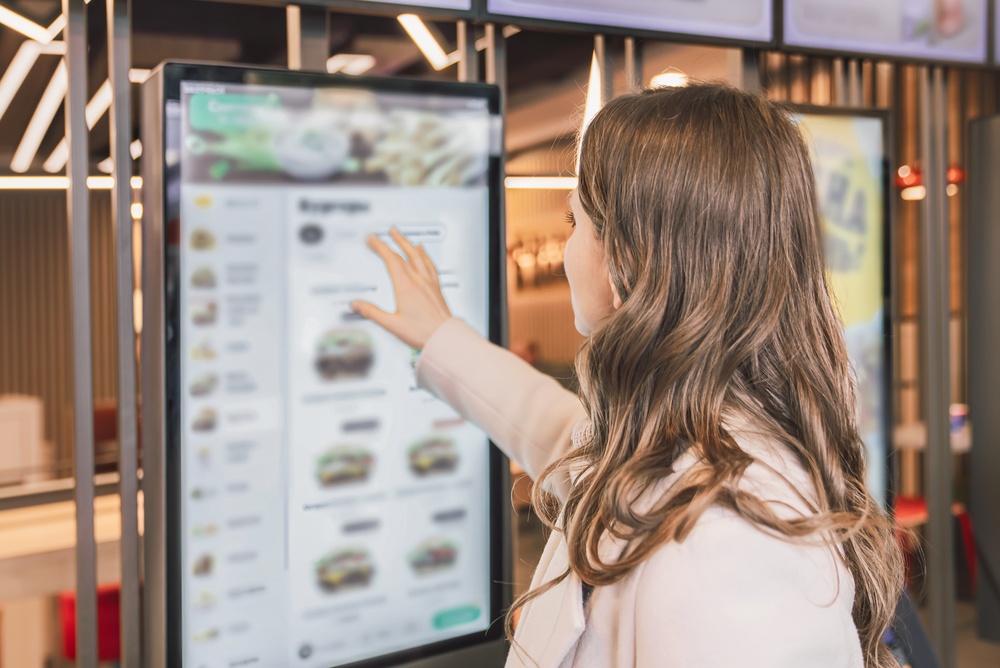
- Instantly updating prices, modifier rules, and menu statuses system-wide through direct cloud sync.
- Automating stock deactivation: When a branch sells out of a specific item, the system dynamically hides it across all ordering channels to prevent guest disappointment.
3. Automated Dayparting & Contextual Scheduling
- Eliminating manual screen and system changes by scheduling automated transitions from breakfast to lunch, dinner, and late-night menus according to store-specific operating hours.
Balancing Corporate Governance with Local Autonomy
- The Hybrid Control Framework: Why rigid corporate control often stalls local marketing initiatives.
- Role-Based Access Control (RBAC): Defining granular permissions inside the Central Admin Dashboard (Corporate HQ vs. Master Franchisee vs. Local Store Manager).
- Automated Workflow Approvals: Allowing franchisees to request localized promotions while giving HQ final approval before content goes live.
Frequently Asked Questions (Q&A)
Q1: What is franchise management software in the restaurant industry?
A: Franchise management software is an enterprise technological architecture that allows corporate headquarters to control, monitor, and automate multi-unit restaurant operations from a single dashboard. It centralizes menu engineering, regional pricing tiers, promotional assets, and brand compliance rules across all franchise branches.
Q2: How does centralized management prevent pricing discrepancies between store registers and digital screens?
A: By using a natively unified tech stack, menu boards and self-order kiosks pull pricing data directly from the enterprise POS database. When corporate HQ adjusts price tiers in the central dashboard, updates reflect across both POS registers and digital displays simultaneously, eliminating manual entry errors.
Q3: Can franchisees still run local promotions without ruining corporate brand standards?
A: Yes. Modern platforms utilize Role-Based Access Control (RBAC) and customizable template zones. Corporate locks global branding elements (logos, fonts, core messaging) while granting franchisees permission to edit designated zones for approved regional specials or local community events.
Q4: How does enterprise franchise management technology support multi-unit scaling?
A: Centralized technology allows corporate teams to onboard new franchise locations rapidly by pushing pre-configured "Gold Master" store profiles to new branch IDs. This automates menu setups, tax rules, and promotional layouts, reducing setup timelines from weeks to hours without expanding corporate IT overhead.
Scale Your Franchise Without Losing Brand Control
Scaling a restaurant chain requires consistent execution across every location. By replacing static displays and fragmented systems with POS-integrated franchise management architecture, enterprise brands can eliminate menu discrepancies, reduce store-level workload, and protect brand equity.
Ready to streamline your franchise operations and enforce 100% brand consistency across every branch?
Book a demo with Okya today to see how our unified POS, smart signage, and multi-unit management ecosystem empowers your brand to scale seamlessly.