The Future of Dining: Why Self-Ordering Kiosks are Now Essential for Enterprise QSRs

The Future of Dining: Why Self-Ordering Kiosks are Now Essential for Enterprise QSRs
In the hyper-competitive landscape of 2025, the Quick Service Restaurant (QSR) industry has reached a pivotal tipping point. What was once considered a "high-tech luxury"—reserved for global flagship locations in tech-forward urban hubs—has rapidly transformed into a baseline requirement for survival. For enterprise-level QSRs, the central challenge has evolved. It is no longer just about making food fast; it is about managing massive operational complexity at scale while maintaining a frictionless guest experience that keeps diners coming back.
As labor costs continue to surge and consumer expectations for digital-first interactions solidify, ordering kiosks have emerged as the most important tools for modern enterprises. At Okya, we specialize in the intersection of hardware and software, providing the integrated ecosystems that power the world’s most efficient systems.
The New Standard of Quick Service: Frictionless or Forgotten
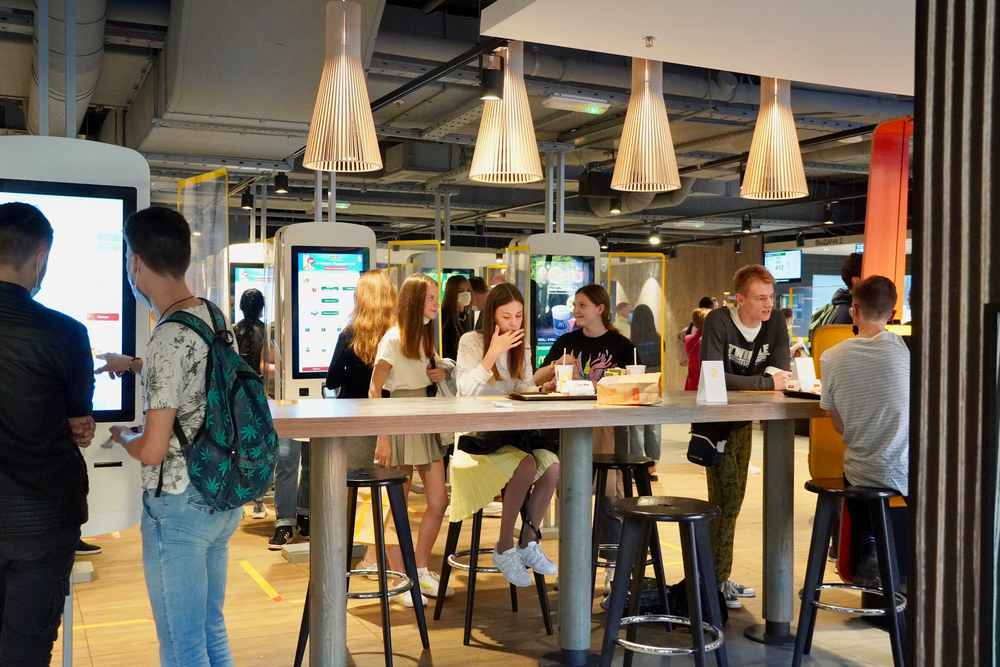
The "Quick" in Quick Service has taken on a new meaning. In a post-pandemic world, convenience has evolved from an option into a mandate. Today’s diners—led by Gen Z and Millennials—increasingly view human interaction during a transaction as a potential point of friction.
According to 2025 industry data, over 66% of consumers now prefer self-service kiosks over traditional counter service. Their motivations are clear and consistent:
- Speed: Eliminating the wait for a staff member to become available.
- Order Control: The ability to customize complex orders without the fear of miscommunication.
- Reduced "Line Anxiety": The psychological comfort of browsing a menu at one’s own pace without the pressure of a line forming behind them.
For the enterprise, this shift is more than just a customer service update; it is a strategic opportunity. By implementing ordering kiosks, you aren't just automating a repetitive task; you are fundamentally aligning your brand with the behavioral DNA of the modern customer.
Redeploying Talent for High-Value Roles

A common misconception is that ordering kiosks are designed to replace human workers. In reality, for a successful enterprise QSR, kiosks redeploy talent. When a kiosk handles the repetitive, data-entry task of order taking, your staff is freed from the counter and empowered to focus on the high-value roles that actually drive brand loyalty:
- Food Quality and Accuracy: Staff can be moved to the kitchen to ensure every burger, bowl, or beverage meets strict brand standards before it leaves the window.
- Guest Hospitality: Team members shift from being "order-takers" to "experience-facilitators" who can assist guests in the dining area, handle complex requests, and maintain a clean environment.
- Operational Velocity: By removing the bottleneck at the register, you can accelerate the "make-line" to meet the significantly increased throughput that kiosks generate.
The Psychology of the “Digital Upsell”
In the fast-paced environment of an enterprise QSR, the ordering process is more than just a transaction—it is a psychological journey. While a human staff member might forget to suggest an add-on during a lunch rush or feel hesitant to push a premium item, a kiosk is the most consistent salesperson on your team. It never tires, never forgets, and utilizes proven psychological triggers to increase ticket sizes.
Here is how the digital experience transforms guest behavior through three key psychological pillars.
The Power of Visual Appetite
In the QSR environment, the old adage holds true: people don’t buy what they read—they buy what they see. High-resolution imagery and dynamic video content on a large kiosk screen trigger "visual hunger" in a way that a static menu board or a verbal suggestion simply cannot.
The most fundamental advantage of a kiosk is its ability to tap into "visual hunger." High-resolution food imagery and dynamic video content trigger a biological craving response that a static menu board or a verbal suggestion simply cannot match.
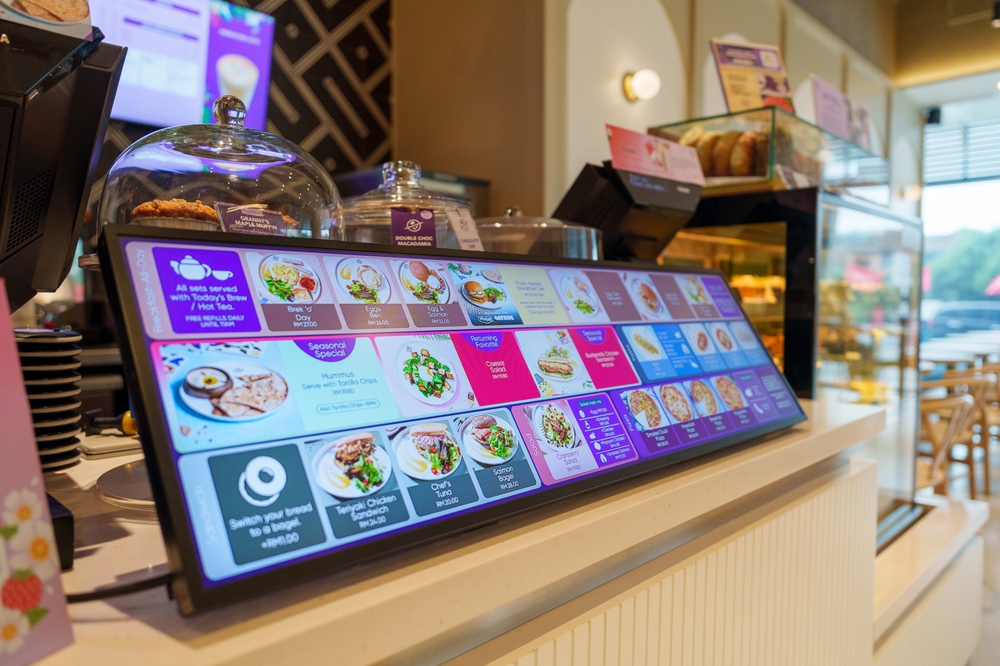
- Visual Prompts vs. Verbal Cues: When a staff member asks, "Would you like to add fries?", the guest processes a verbal question. When a kiosk shows a high-definition, steaming image of golden fries at the moment of checkout, the guest reacts to a visual stimulus.
- Clarity in Choice: Customers make faster, more confident decisions when they can see portion sizes, available add-ons, and bundles clearly. This transparency eliminates the "guessing game" of traditional ordering.
- Strategic Timing: Upsell cards for sides, drinks, or seasonal desserts appear at the exact psychological moment of decision, making "visual appetite" the primary driver of the sale.
Zero-Pressure Exploration
The presence of a human cashier can sometimes create a "social friction" that limits spending. Kiosks provide a "safe," zero-pressure environment for guests to explore the full depth of your menu.
The presence of a human at the counter often creates "line anxiety"—a subconscious pressure to order quickly to avoid holding up other customers. Kiosks remove this social friction, creating a "safe" environment for exploration.
- Removing Social Embarrassment: Guests feel no judgment when taking their time to browse modifiers or adding multiple premium toppings. This leads to higher customization and, consequently, higher margins.
- Deep Menu Discovery: Without the pressure of a ticking clock, first-time visitors tend to browse the full depth of the menu. They are significantly more likely to try a new, higher-margin limited-time offer (LTO) when they can review ingredients and nutritional information at their own pace.
- Confidence in Customization: When guests control the screen, they have higher confidence that their specific modifiers (e.g., "no onions, extra sauce") are recorded correctly, leading to higher overall satisfaction.
Choice Architecture & Smart Defaults
Kiosks don’t just present options; they use "choice architecture" to guide the guest toward the most valuable version of their order. By structuring the order flow strategically, enterprises can subtly shape consumer behavior.
- The Power of Defaults: By setting "smart defaults" such as pre-selecting a medium size or defaulting an entry to a "Make it a Combo" screen—kiosks nudge guests toward higher-value selections.
- Intelligent Suggestion Engines: Modern kiosks use logic-based modifiers. If a guest selects a spicy chicken sandwich, the kiosk highlights cooling beverage options or cooling sides (like coleslaw) first.
- Highlighting Margin-Positive Options: The UI is designed to place high-margin add-ons in the "prime real estate" of the screen, ensuring they are the first things a guest sees during the customization phase.
Data-Driven Decisions: The Enterprise Advantage
For an enterprise-level QSR, the most valuable byproduct of a kiosk is not just the order—it is the data. Every interaction provides a wealth of information that can be used to optimize operations globally. While traditional counter service offers a snapshot of the final sale, kiosks provide a recording of the entire decision-making process.
Behavioral Heatmaps (What Guests Actually Look At)
By analyzing touch data and navigation paths, brands can move beyond guessing and start seeing. Kiosks generate behavioral heatmaps that reveal exactly which menu sections attract the most attention and which items are being ignored or scrolled past.
- Identify Visual Dead Zones: Understand if your high-margin items are placed in areas of the screen that guests naturally overlook.
- Optimize Navigation: If data shows guests are constantly backtracking, you can redesign the flow to reduce friction and speed up the ordering process.

Automated Menu Experimentation (Always-On Optimization)
The enterprise advantage lies in the ability to test at scale. Instead of static menu rollouts, brands can run continuous experiments across different regions or demographics.
- Real-Time Testing: Test two different layouts, pricing models, or promotional images simultaneously.
- Global Validation: Run a pilot experiment in select locations to gather statistically significant data before committing to a global rollout, ensuring that every change is backed by proven revenue growth.
Inventory Synchronization
Okya’s kiosks integrate directly with your POS and inventory management systems to ensure the digital storefront matches the physical kitchen.
- Eliminate "Refund Friction": If a specific ingredient runs out, the item is instantly removed or marked as "sold out" across all kiosks in real-time. This prevents the guest frustration that occurs when a customer pays for an item only to be told minutes later that it’s unavailable.
- Dynamic Availability: Automatically promote items that have high stock levels to reduce waste and optimize inventory turnover.
Future-Proofing with Okya: Scalability and Reliability
Implementing technology at the enterprise level requires a partner that understands the stakes of global operations. Okya provides the reliability and scalability needed to manage thousands of units.
Enterprise Scalability:
Our platform is engineered to handle the "heavy lifting" of enterprise-level data. In a traditional legacy setup, pushing a price change or a new promotional banner across a thousand locations could take hours or even days to sync, leading to inconsistent pricing and guest confusion. Okya changes that.
The Unified Ecosystem:
We don’t believe in "siloed" tech where the kiosk, the mobile app, and the POS act as strangers to one another. Okya kiosks are part of a unified ecosystem that connects every digital touchpoint into a single source of truth.
Resilience in Every Environment:
A kiosk is only as good as its uptime. Whether it is situated in a high-humidity coastal environment, a high-traffic transit hub, or a busy suburban drive-thru, Okya is built for 24/7 industrial durability.

Conclusion: Don’t Just Keep Up—Lead the Way
The future of dining is no longer a distant vision; it is happening now at the kiosk screen. Enterprise QSRs that hesitate to adopt self-ordering technology risk more than just long lines—they risk losing their competitive edge in a world where speed, personalization, and efficiency are the primary currencies.
By integrating ordering kiosks, you solve the triple threat of modern QSR: labor shortages, rising operational costs, and the demand for a frictionless digital experience.
Ready to transform your enterprise QSR operations?
Book a Demo with Okya Today and discover how Okya’s end-to-end kiosk solutions can drive your next phase of global growth.


